
Summary
Floodwater damages car interiors by soaking carpet, saturating seat foam, trapping moisture, encouraging mold growth, and corroding wiring. Professional detailing can clean, dry, deodorize, and refresh salvageable carpet, upholstery, and trim. Hidden electrical faults, rusted connectors, and badly contaminated padding need a qualified technician or replacement before cosmetic work makes sense.
The flood is gone, but the water is not. It hides in carpet padding, seat foam, and door panels, waiting for a warm day to wake the spores. That quiet process explains the musty smell you notice a week later, even after the car looks dry. We understand how upsetting this feels, because your car is part of your daily life.
The risks of mold in flooded vehicle interiors grow with every damp day, affecting both your health and your upholstery. Detailing can clean a lot, but it has limits. Here is what cleaning can repair, what it cannot touch, and how to decide with confidence.
What Floodwater Does Inside a Car
Water rarely stays where it lands, so the damage reaches deeper than the surface you can see.
Soaked Carpet and Padding
Carpet and padding soak up water fast, so damage in car upholstery and carpet spreads far below the surface. Floodwater also carries silt and germs, which settle into the fibers and leave a stubborn smell. A quick vacuum cannot reach that deep, and the padding underneath can stay wet for days. Removing the carpet may be necessary to inspect and dry both layers.
Saturated Seat Foam
Thick foam inside each seat holds water long after the cover feels dry. That trapped moisture feeds odors and slowly weakens the cushion. Fabric and leather covers may clean up well, but the core needs to dry completely and be assessed for contamination before reuse. Skipping this step invites odors and mold to return.
Hidden Mold Growth
Mold risks in flooded vehicle cabins can develop quickly in wet conditions. Moisture may affect HVAC components, potentially allowing contamination to spread throughout the ventilation system. A professional inspection and appropriate HVAC cleaning can address contamination and reduce odors throughout the cabin. Our mold remediation service explains the next steps for affected interiors.
What Professional Detailing Can Fix in a Flood-Damaged Vehicle Interior
Skilled cleaning can restore salvageable materials after a qualified technician has assessed mechanical, electrical, and safety-system damage.
Deep Carpet Extraction
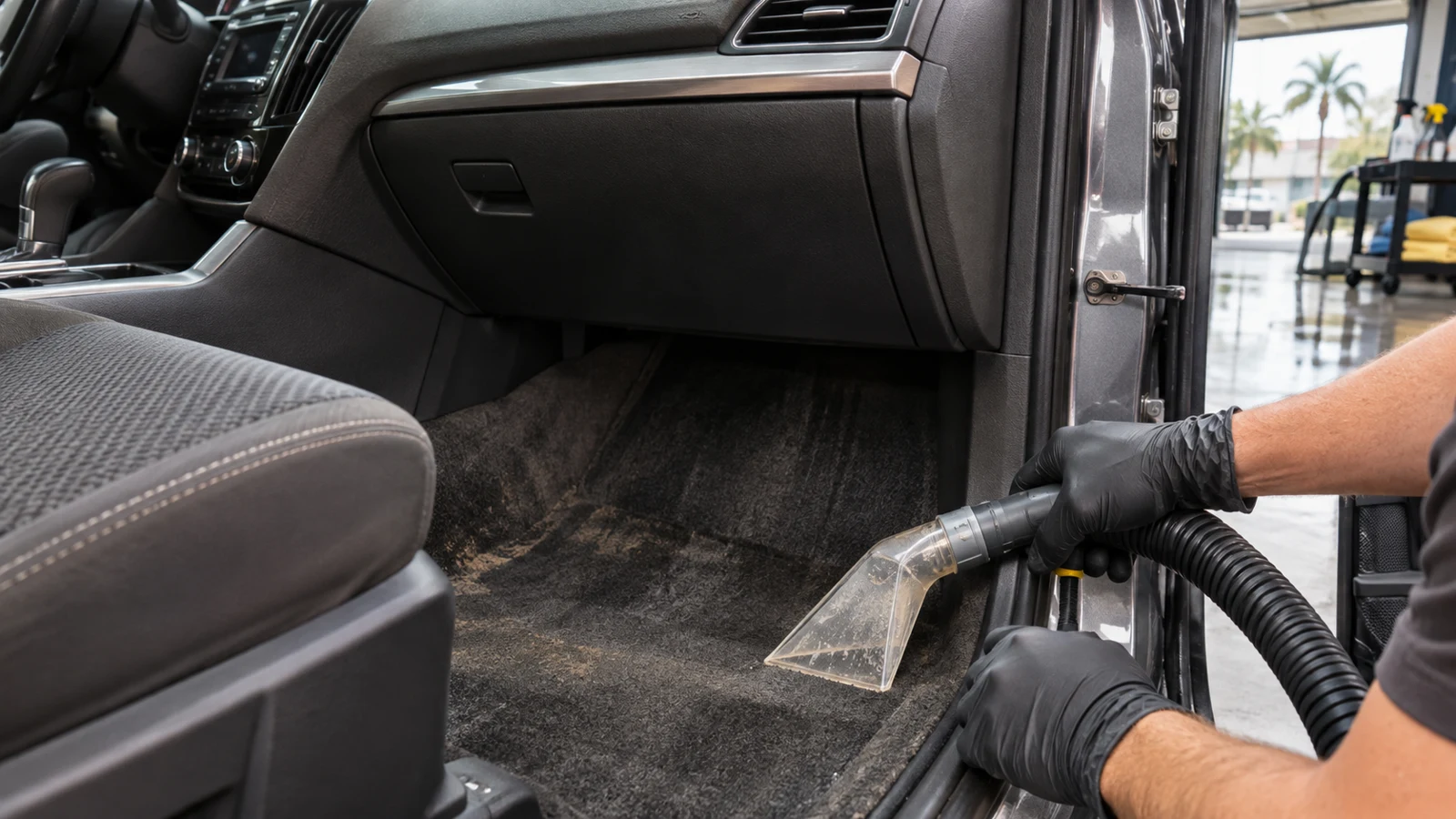
Professional extraction and the right cleaning products can remove silt and reduce odors from salvageable carpet. Thorough drying with the right equipment helps remove moisture once the carpet is out of the car. Treat the job as a patient process, not a quick rinse.
Salvaging Car Seats After Water Intrusion
A trained technician removes the seats safely because power seats and airbag connectors sit underneath them. The process includes shampooing the covers and thoroughly drying the cushions. Seats with contaminated or persistently damp foam may require replacement of affected materials. Ask the shop to show you the foam before you decide.
Odor and Bacteria Treatment
Appropriate cleaners can remove surface mold from compatible materials, but disinfection alone cannot guarantee complete removal of contamination. A fresh scent only hides the problem. Real odor control means removing the moisture and contaminated materials behind it. A clean smell does not prove that a vehicle is safe.
Leather and Vinyl Revival
Leather and vinyl may recover with suitable cleaning and conditioning, depending on contamination levels and underlying material damage. Detailers wipe away residue, dry every seam, and apply conditioner only after the surface is completely dry. Cracked or warped pieces cannot return to their original shape. Patience during drying protects the finish.
Trim and Panel Cleanup
Dashboards, door panels, and plastic trim respond well to wiping, drying, and gentle treatment. Moisture can become trapped behind door panels, so detailers should inspect these areas closely. Panels that swell or peel may require replacement, and cleaning alone cannot reverse this damage. A careful check now prevents a surprise later.
Shameez Car Detailing New Orleans offers interior car detailing for salvageable cabin surfaces. Contact us to discuss the damage and arrange an assessment after mechanical and safety checks.
What Detailing Cannot Fix
Cleaning stops at the surface, but some flood damage lives well below.
Corroded Wiring and Computer Modules
Electrical issues from water in car interior spaces start when moisture reaches the wiring and computers hidden under the carpet. Corrosion builds slowly, so a car may run well today and fail next month. Only a qualified mechanic can test and repair these parts. Ask for a written inspection report so you know what was tested.
Airbag and Safety Sensors
Water damage can cause airbag and anti-lock brake systems to malfunction. A detailer cannot certify these systems, and a clean cabin does not prove they work. Have a qualified technician inspect the affected safety systems before you drive again.
Saltwater Corrosion
Saltwater speeds up corrosion on electrical connections and metal parts. Corrosion may remain hidden inside connectors long after the cabin appears clean. Cleaning the interior cannot stop rust that sits behind panels, so a thorough inspection matters even more after a coastal flood.
Flood Titles and Resale Value
A car declared a total loss may receive a flood or salvage title, and interior cleaning cannot remove that record. Flood damage can affect safety, reliability, and resale value. Honest records protect future owners and drivers. Check the vehicle history and consult NICB VINCheck when researching a used vehicle; a clean result does not rule out all flood damage.
Water Damage in Car Upholstery and Carpet: Fix or Replace
The table below shows which water-damaged car interior materials may be salvageable and which may need replacement. The water source, contamination, and time spent wet all affect the decision.
| Interior Part | Detailing Can Help | Replacement Likely When |
| Carpet | Extraction, drying, deodorizing | Contamination or smell remains after drying |
| Carpet padding | Limited help | Padding is contaminated or stays wet |
| Fabric seats | Cleaning and full drying | Foam is contaminated or cannot dry fully |
| Leather seats | Cleaning and conditioning | Cracks or damaged foam appear |
| Door panels | Wiping and drying | Panels swell or peel |
What to Do Immediately After Your Car Gets Flooded
Taking the right steps early can limit further damage. Do not enter floodwater or approach a vehicle where electrical or other hazards may be present.
- Do not start the engine: Water may have reached electrical components or engine parts.
- Document the damage: Photograph wet areas and visible waterlines from a safe location for your insurance claim.
- Contact your insurer and a mechanic: Ask about the next steps before attempting repairs. State Farm’s flood-damaged vehicle guidance explains why prompt reporting and inspection matter.
- Leave electrical work to a technician: Do not touch submerged electrical components, high-voltage batteries, or airbag connectors.
- Remove mats and ventilate when safe: Open the doors in a secure, dry location only after the vehicle is safe to approach.
- Arrange professional drying: Have a qualified shop inspect carpets, seats, and hidden areas for trapped moisture. Keep receipts for insurance purposes.
Frequently Asked Questions
Can flood-damaged car interiors be saved?
Some can, depending on the water source, depth, contamination, and time spent wet. Fast drying, appropriate cleaning, and a qualified technician’s inspection help determine what is salvageable. Cleaning cannot certify the car as safe.
How fast does mold start growing?
Mold can develop quickly in damp conditions. The EPA recommends drying wet materials within 24 to 48 hours to help prevent mold growth. Cars that stay wet for days are more likely to have lasting odors and contamination.
Is salvaging car seats after water intrusion worth the cost?
It depends on the seat’s condition and contamination. Covers that clean well and foam that dries fully may be salvageable, while contaminated or damaged materials may need replacement. Get a written assessment and compare repair costs.
Can detailing remove the musty smell for good?
Deep extraction and appropriate cleaning can reduce odors in salvageable carpet and fabric. If the smell returns, hidden moisture, contamination, or HVAC problems may require further inspection. Proper drying addresses the cause, not just the smell.
Should I start the car after a flood?
Starting the engine can worsen damage. Wait for a qualified mechanic to inspect the vehicle and advise whether it can be started or needs towing.
Conclusion
A flood does not always end your car’s story. Professional detailing may clean, dry, and refresh salvageable carpet, seats, and trim. However, it cannot repair corroded wiring, damaged sensors, or a flood title. Act quickly, document everything, and have a qualified technician inspect the vehicle before trusting it again.
For routine cabin care after repairs, read our professional interior cleaning guide. Once the vehicle is safe and restored, our ceramic coating vs wax guide can help you choose exterior protection.