
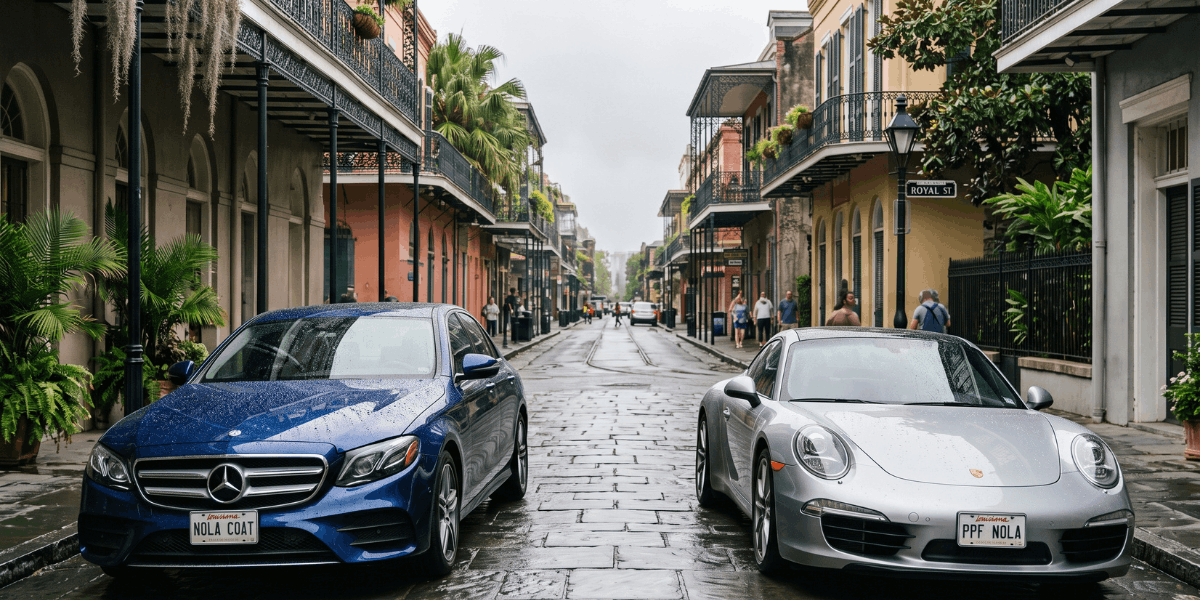
Living in New Orleans means your car faces a unique set of daily challenges that most vehicle owners in other cities simply don’t deal with. Intense southern sun, heavy rainfall, relentless humidity, road debris, and environmental pollutants all take a serious toll on your vehicle’s exterior finish over time. If you’re considering paint protection, you’ve likely come across two leading options: ceramic coating and paint protection film (PPF).
Choosing between them isn’t always straightforward, especially in a climate as demanding as New Orleans. This guide provides a straightforward, unbiased overview of both solutions so you can make the right call for your car, lifestyle, and budget.
Understanding Car Paint Protection in a City Like New Orleans
Average humidity in New Orleans sits above 70% year-round, UV levels are consistently high, and summer rain can be intense enough to leave water spots and mineral deposits on untreated paint.
Add road debris, tree sap, bird droppings, and the wear of city driving, and it becomes clear that the car paint protection in New Orleans, LA, that car owners invest in is a practical necessity, not a luxury, for anyone who wants their vehicle to hold its value and look sharp for years to come.
What Is Ceramic Coating and How Does It Work?
Ceramic coating is a liquid-based polymer that forms a chemical bond with the factory-applied paint at the molecular level. Once cured, it creates a semi-permanent hydrophobic layer that causes water, mud, and contaminants to bead off rather than bond to the surface. It also protects against UV rays, oxidation, bird droppings, acid rain, and light surface marring.
Quality ceramic coatings like GYEON Mohs last between three and seven years, depending on the package and maintenance routine. Unlike traditional wax, ceramic coating does not wash off or degrade quickly. It forms a durable shell that keeps paint looking freshly detailed with minimal effort between washes. For vehicle owners in high-humidity environments, the added layer of chemical bonding also means that environmental pollutants and contaminants have significantly less opportunity to penetrate and damage the clear coat over time.
What Is Paint Protection Film (PPF)?
Paint Protection Film (PPF) is a clear thermoplastic urethane film that is physically applied over the car’s painted surface. Unlike ceramic coating, PPF is a physical barrier engineered to absorb impacts from stone chips, road debris, and minor abrasions without allowing damage to reach the underlying paint.
High-quality PPF also features self-healing capability; minor surface scratches fade away when heated by sunlight or warm water. PPF typically lasts five to ten years and is most often used on vulnerable areas like the front bumper, hood, side mirrors, and door edges.
Ceramic Coating vs PPF New Orleans: A Head-to-Head Breakdown
Here is how each option performs across the factors that matter most to New Orleans drivers.
Protection Against Physical Impact
PPF is purpose-built for this. Stone chips, gravel, and hard contact are absorbed by the film before reaching the paint. Ceramic coating offers no meaningful impact resistance; a rock chip will pass right through it. If physical damage is your primary concern, PPF has a clear advantage.
Hydrophobic Performance and Chemical Resistance
Ceramic coating leads here. Its hydrophobic surface causes water, grime, and acidic contaminants to slide off with minimal contact, significantly reducing the risk of chemical etching. PPF has some water-repellent properties, but they are not as strong as a properly applied ceramic coating.
How Ceramic Coating Handles New Orleans Humidity
Ceramic coatings in New Orleans humidity are one of its biggest local advantages. The hydrophobic barrier it creates is highly effective at repelling moisture, critical in a city where humidity rarely drops below 60%. Without protection, high humidity accelerates oxidation, promotes water spotting, and creates conditions where mold can develop in gaps around doors and trim. A properly applied ceramic coating prevents moisture from bonding to the paint surface year-round.
Appearance and Gloss Quality
Ceramic coating wins on aesthetics. It adds a deep, wet-look gloss that enhances the paint’s original color and depth. PPF is optically clear but varies in finish; some products offer a high gloss, while others have a slightly matte appearance. For car owners who prioritize visual impact alongside protection, ceramic coating is the stronger choice.
Lifespan and Durability
PPF generally provides protection for five to ten years when properly cared for. Premium ceramic coatings last three to seven years, depending on the product and maintenance. PPF’s self-healing surface also maintains its appearance after minor contact damage without professional repair.
Cost Comparison
PPF is the more expensive option. A full vehicle PPF application ranges from $2,000 to $7,000 or more, depending on vehicle size and film brand. Ceramic coating is more accessible, with professional packages typically ranging from $500 to $1,500. For budget-conscious New Orleans car owners who still want long-lasting protection, ceramic coating offers a strong return on investment.
Shameez Car Detailing New Orleans offers convenient mobile auto detailing services in New Orleans that come directly to your home or workplace, making it easier than ever to book your ceramic coating or paint protection appointment.
Which Option Is Right for Your Car in New Orleans?
The right choice depends on your vehicle, priorities, and budget. Here are clear indicators to guide your decision.
Ceramic coating is the better fit if you:
- Drive a daily commuter vehicle and want low-maintenance, long-lasting protection
- Want to guard against humidity, UV rays, and chemical contaminants
- Want a cost-effective solution with strong visual results
- Want a finish that keeps your car cleaner between washes
PPF is the stronger choice if you:
- Own a new, luxury, or high-value vehicle that you want fully shielded
- Frequently travel on highways with significant stone chip risk
- Want self-healing protection that maintains its appearance without repair
- Are willing to invest more for the most comprehensive physical protection available
For the most thorough defense, combining both is the smartest approach. Apply PPF to high-impact zones and layer ceramic coating over the remaining surface for a comprehensive, long-lasting shield.
Why Professional Auto Detailing Comes First
No paint protection product performs at its best over an imperfect surface. Before applying ceramic coating or PPF, the vehicle must be thoroughly cleaned, decontaminated, and in many cases, paint-corrected to remove swirl marks and oxidation. Our Auto detailing New Orleans, Louisiana professionals carry out this essential preparation to ensure the coating bonds correctly and delivers its full protective potential.
Applying a protective coating over flawed paint simply seals those imperfections permanently. A thorough detail before coating also gives the technician the opportunity to identify any areas of concern, such as existing chips or rust spots, that should be addressed before protection is applied.
Frequently Asked Questions
Is ceramic coating worth it in New Orleans?
Yes, New Orleans’ humidity, strong UV exposure, and frequent rain make ceramic coating a particularly smart investment. Its hydrophobic barrier and UV resistance directly address the city’s most damaging environmental conditions.
How long does ceramic coating last in humid climates?
A premium ceramic coating, when professionally applied, typically lasts three to seven years in humid climates. Consistent maintenance and regular washing extend that lifespan considerably.
Can PPF be applied over an existing ceramic coating?
Yes, though most professionals recommend applying PPF first, then ceramic coating over it, for the best long-term combined result.
What areas of the car benefit most from PPF?
The front bumper, hood leading edge, side mirrors, door edges, and rocker panels experience the highest impact damage and benefit most from PPF. These areas see the greatest exposure to road debris during daily driving.
Does ceramic coating help prevent rust in New Orleans?
Ceramic coating creates a moisture barrier that reduces the risk of oxidation on intact paint surfaces. However, it does not prevent rust where paint is already compromised or where bare metal is exposed.
Conclusion
Both ceramic coating and PPF are proven paint protection solutions that serve different purposes. Ceramic coating vs PPF in New Orleans is not a question with a single universal answer. If daily protection, UV resistance, hydrophobic performance, and cost efficiency are your priorities, ceramic coating is an excellent investment for New Orleans driving conditions.
If physical impact resistance and long-term durability matter more, PPF is worth the additional cost. For the most complete protection, combining both gives your car a comprehensive defense against everything this city can throw at it.
Shameez Car Detailing New Orleans is ready to help you choose and apply the right protection for your vehicle. Book your appointment today and explore top-rated interior car detailing in New Orleans, along with premium paint protection options, with same-day booking available at five convenient city location.