
Summary
Humid air, heavy rain, and leaks make New Orleans cars prone to musty odors and mold. Start by locating the moisture source, drying the carpet quickly, addressing affected materials, and checking the AC system. Interior detailing and simple daily habits help keep the cabin dry, fresh, and comfortable.
Humidity is the quietest passenger in every New Orleans car. It rides along without a ticket, settles into the carpet, and waits for mold to join the trip. Neither one pays rent, so it is time to evict them. A clear plan starts with finding the moisture, then deciding whether routine cleaning or professional remediation is needed.
This guide explains why New Orleans cabins turn musty, how to address the odor step by step, and which habits keep it from returning. A recurring smell needs more than a quick fragrance spray. Read on for practical ways to identify and manage the source.
Why New Orleans Cars Develop a Musty Smell
Our climate gives moisture plenty of opportunities to linger, so it helps to know the causes first.
Year-Round Humidity
Warm, humid air can build up moisture inside vehicles, especially when wet items or existing leaks are involved. Good moisture prevention in vehicle cabins starts with understanding that damp materials need active drying. Humidity alone is not a reason to assume every odor is mold.
Rain, Floods, and Leaks
Heavy storms push water through worn door seals, sunroof drains, and clogged cowl vents. Even a small leak can soak carpet and padding where you cannot see it. Street flooding increases the risk because floodwater can carry dirt and contaminants into the cabin. If flooding occurred, read our flood-damaged car interior guide before treating it as routine cleaning.
Damp Floor Mats and Carpet
Wet shoes, umbrellas, and spilled drinks leave moisture in floor mats and carpet. The padding underneath can retain moisture for days, creating conditions that support mold growth. The EPA’s moisture guidance recommends drying wet materials within 24 to 48 hours to help prevent mold. This general principle is useful when dealing with wet cabin materials too.
Condensation on Glass
On cool mornings, warm breath and wet clothes fog the windows and leave droplets on trim and vents. Moisture can settle into surrounding materials. If condensation is frequent, check for damp mats and hidden water rather than only wiping the windows.
Parked Cars With Shut Windows
A car parked for days with closed windows can trap moisture from wet seats, carpet, or gear. That dampness may linger in the seats and headliner, so you may be greeted by a musty smell when you return. Keep the vehicle secure, and ventilate only when weather and conditions allow.
How to Remove Musty Car Smell from Humidity
Work through these steps in order. If mold is widespread, the water was contaminated, or you have a health condition affected by mold exposure, arrange professional help instead of disturbing affected materials.
Tracing the Hidden Source
Check the carpet, under-seat areas, trunk, and spare tire well for damp spots. Inspect door seals and sunroof drains, and have leaks repaired. Fix the water source first, or the smell may return after every cleaning. Our guide to musty smells after a rainstorm covers rain-related causes in more detail.
Vacuuming Debris and Moisture
For ordinary wet carpet without visible mold or contaminated floodwater, remove the floor mats and use a suitable wet-dry extractor to remove moisture. Do not use a household dry vacuum on water. Avoid dry-vacuuming visible mold, which can spread particles; have affected materials assessed first.
Drying Wet Carpet to Prevent Smell
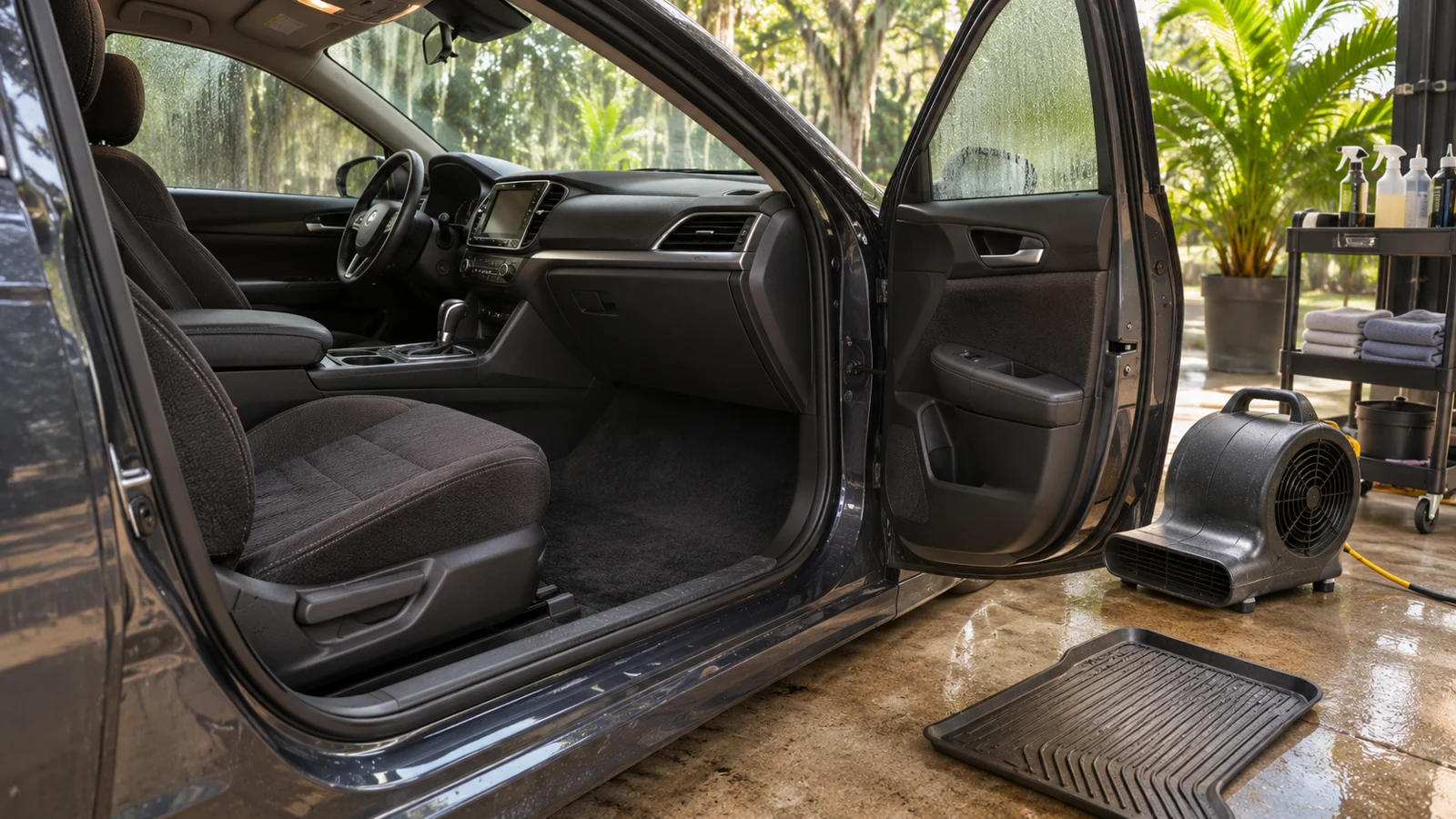
Aim to dry carpet and padding promptly. Extract water, improve airflow, and use suitable drying equipment in a safe, dry setting. The surface may feel dry while the padding remains damp. A professional may need to lift the carpet to inspect and dry hidden layers without disturbing wiring.
Eliminating Mold and Mildew in Car Interior
Small surface spots and deeply contaminated upholstery need different treatment. A cleaner intended for automotive fabric may help with suitable surfaces, but test an inconspicuous area and follow the product instructions. Do not mix cleaning chemicals. Porous padding or foam with established contamination may need replacement. Arrange professional mold remediation when growth or odors persist.
Treating Seats and Fabric
Seats and headliners can retain moisture and odors. Use suitable products on compatible upholstery and avoid soaking seat foam, electronics, or the headliner adhesive. Dry materials thoroughly. For routine care of otherwise clean interiors, see our interior deep-cleaning guide.
Wiping Vents, Glass, and Trim
Clean suitable hard surfaces with an appropriate cleaner, then dry them with a clean microfiber towel. Gently clean accessible vent slats. Seek professional help if mold or persistent odors appear inside the HVAC system; cleaning the visible vent openings does not reach the evaporator or hidden ductwork.
Airing Out the Cabin
Finish routine drying in a dry, secure location with ventilation when conditions allow. Open doors only while the vehicle is safely supervised. Ventilation helps when combined with moisture extraction and thorough drying. If the smell returns, recheck the source instead of adding air freshener.
Shameez Car Detailing New Orleans offers interior car detailing to help clean salvageable upholstery, carpet, and trim. Contact us to discuss recurring odors and the right next step for your vehicle.
Clearing Musty Smells from the AC System
Your car’s AC can spread musty odors throughout the cabin when moisture collects around the evaporator. A clogged drain tube can also trap water, sometimes leaving damp patches on the passenger floor. Check the cabin air filter for dirt, moisture, or unpleasant smells, and replace it according to the vehicle’s instructions. Persistent odors may indicate hidden moisture or buildup inside the system.
Follow your vehicle manual for ventilation and AC care. Some vehicles use automatic evaporator-drying features; others may benefit from a brief fan-only period before parking if the manufacturer recommends it. Use only evaporator cleaners designed for the system, following product instructions. Avoid spraying liquids near electrical components. Contact a qualified technician when odors persist, cooling weakens, or water leaks appear.
Common Musty Odor Sources and Their Fixes
Identifying the source helps you choose the right fix and prevent moisture from returning.
| Smell Source | Common Sign | Best First Fix |
| Wet carpet or mats | Damp feel and earthy smell | Extract water and dry promptly |
| Dirty evaporator or blocked drain | Musty blast at startup | Have the evaporator and drain inspected |
| Dirty cabin air filter | Weak airflow or damp smell | Inspect and replace the filter as needed |
| Leaking door or window seal | Damp patches after rain | Repair the leak, then dry the area |
| Condensation on glass | Foggy windows and damp cabin | Use the defroster and check for wet materials |
Habits That Keep the Cabin Dry
A few small routines help stop moisture before it becomes a recurring problem.
- Shake out floor mats after rainy or muddy trips, and let them dry completely before reuse.
- Park under suitable cover when possible to reduce rain exposure.
- Keep wet umbrellas, gear, and towels out of the car.
- Use properly fitted rubber floor liners and empty collected water so it cannot soak the carpet.
- Begin drying wet carpet promptly with equipment designed for water extraction, then check the padding.
- Use the defroster to clear condensation and ventilate when weather and security allow.
Frequently Asked Questions
How long does mold take to grow in a wet car?
Growth depends on moisture, temperature, materials, and contamination. Dry wet carpet and padding within 24 to 48 hours where possible to help prevent mold. Check hidden layers rather than relying on a dry-looking surface.
Can mold in a car harm my health?
Mold exposure can trigger allergic reactions or aggravate asthma in sensitive people. The EPA explains these general mold health effects. Avoid exposure to affected materials, and speak with a health professional if symptoms occur.
Why does my car AC smell musty at startup?
Moisture around the evaporator can encourage buildup and musty odors. A dirty filter or blocked drain can contribute too. A qualified technician can identify the cause rather than treating every smell with the same spray.
Do air fresheners fix a musty smell?
No. Air fresheners mask odors without addressing their cause. Remove trapped moisture, clean or replace affected materials as appropriate, and dry the cabin thoroughly to reduce recurring smells.
When should I call a professional?
Contact a professional when odors persist after cleaning, mold is widespread, floodwater enters the cabin, or hidden areas stay damp. Electrical or safety concerns require a qualified mechanic before detailing.
Conclusion
New Orleans humidity can leave your car vulnerable to musty odors, moisture, and mold. Identify leaks, dry wet carpets, address affected materials, and maintain the AC system to keep your cabin fresh. Preventing moisture buildup helps reduce recurring odors and protect interior materials in rainy, humid weather.
Some water damage needs expert assessment. Our guide to what detailing can and cannot fix after flooding explains those limits. Contact Shameez Car Detailing New Orleans to discuss cleaning, drying, and remediation options.