
Summary:
Paint correction uses abrasive polishing to reduce swirl marks, haze, and light scratches. Many clear-coat-only marks can be removed, while deeper scratches or damage that reach underlying layers may require paint repair. Single-stage work suits light defects, and multi-stage work handles heavier damage.
A scratch tells a small story about a car’s life. Some marks start with a branch, a grocery bag, or a rough wash mitt, and others signal deeper trouble that no polish can reach. Paint correction can remove or reduce many swirl marks and minor clear-coat scratches, but it cannot fix every type of paint damage.
Below is the swirl mark removal process explained in plain, simple words, along with a clear, honest look at which marks polishing can fix safely and which ones need proper repair. The goal here is simple: help every driver understand the paint, the process, and the right next step with steady confidence and calm.
What Is Automotive Paint Correction in Simple Terms
Automotive paint correction restores a vehicle’s paint by reducing visible imperfections. A car’s clear coat forms a protective layer over the colored paint, helping shield it from sunlight, rain, and environmental exposure. However, this layer can develop fine scratches and swirl marks over time, making the finish appear dull. Understanding how paint correction works helps explain how these defects are treated.
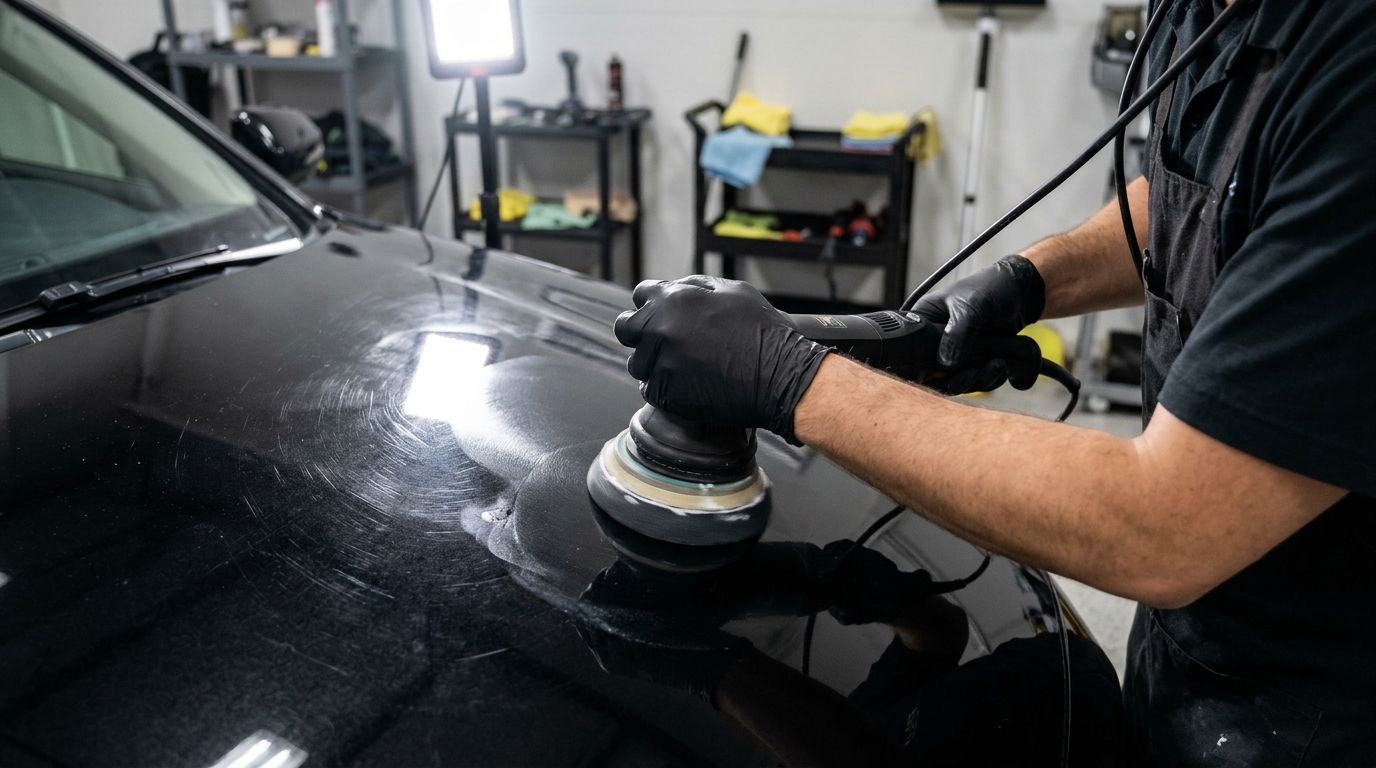
Paint correction typically involves machine polishing with fine abrasives to level a small amount of clear coat around surface imperfections. This allows light to reflect more evenly, making swirl marks and minor scratches less noticeable or removing them entirely. Improper washing, automatic car washes, dirty mitts, and dry wiping can cause these marks by dragging grit across the paint.
Which Scratches Can Paint Correction Remove?
Every mark sits at a different depth, and depth decides if polishing can help.
Light Swirl Marks and Haze
Fine spiderweb lines and dull haze often respond well to polishing. Many daily drivers develop this kind of damage through routine washing and wiping. Correcting it can restore gloss and improve the paint’s overall appearance.
Clear Coat Scratches vs Deep Paint Damage
Scratches in the clear coat can be leveled out, while deep gouges, rock chips, and cracks are usually beyond polishing. Polishing cannot restore paint that is already gone. A shop can check the depth before starting any work.
Limits of Thin Clear Coat
Correction permanently removes some clear coat, and each panel has limited material available. A careful shop assesses paint thickness and tests a small spot before polishing. This method helps prevent removing too much clear coat during polishing.
Swirl marks and light scratches don’t have to detract from your car’s appearance. Shameez Car Detailing New Orleans offers auto paint correction services to restore a smoother, more refined finish. Reach out today and let your vehicle’s natural gloss take center stage!
How to Tell If a Scratch Can Be Buffed Out
Start by examining the scratch under good lighting. Light swirl marks and fine surface scratches often affect only the clear coat, making them suitable for paint correction. Wash the area first to remove dirt, as surface residue can hide the scratch’s true depth and appearance.
Gently run your fingernail across the clean scratch without applying pressure. This test is a rough guide, not a precise measurement, but it still helps. When your nail glides smoothly, polishing may remove or reduce the mark. If a scratch catches your nail, it may extend deeper into the paint and require touch-up paint or professional repair rather than buffing alone. A shop can confirm the depth with proper tools before any work begins.
Single Stage vs Multi Stage Paint Correction
Single-stage correction uses one polishing step to remove light swirls and haze, restore gloss, and improve the paint’s overall appearance. It suits daily drivers in decent shape, costs less, and removes less clear coat.
Multi-stage correction uses successive polishing steps to reduce heavier scratches and oxidation, then follows with finer polishing for clarity. Neglected paint may benefit, but aggressive correction can remove more clear coat.
Swirl Mark Removal Process Explained
Safely removing swirl marks involves several careful steps to prepare the paint, correct imperfections, and protect the finished surface.
- Wash and decontaminate: Clean the vehicle thoroughly to remove dirt, grime, and bonded contaminants that could cause additional scratches during polishing.
- Inspect the paint: Examine the surface under suitable lighting to identify swirl marks, haze, scratches, and other visible imperfections before choosing correction methods.
- Measure the clear coat: Check the paint thickness to assess how much material is available for correction and reduce the risk of removing too much.
- Test a small area: Apply a suitable polishing method to a test spot to evaluate results and determine the least aggressive effective approach.
- Cut and polish: Use a cutting compound when necessary to reduce deeper defects, then refine the finish with finer polishing products for clarity.
- Apply paint protection: Finish with wax, sealant, or ceramic coating to help protect the corrected surface and maintain its improved appearance.
Clear Coat Scratches vs. Deep Paint Damage at a Glance
Scratch depth determines the right approach. Surface marks respond to polishing, while deeper paint damage needs repair.
| Type of Paint Damage | Fingernail Test Result | Recommended Treatment |
| Light swirl marks and haze | Usually glides smoothly | Single-stage paint correction |
| Fine scratches in the clear coat | Usually glides smoothly | Single- or multi-stage paint correction |
| Deeper clear coat scratches | May catch slightly | Professional assessment and possible multi-stage correction |
| Scratches reaching the colored paint | May catch | Touch-up paint or paint repair |
| Rock chips and cracked paint | Not a reliable test | Paint repair |
Frequently Asked Questions
What is automotive paint correction?
It is a machine polishing process that removes a thin layer of clear coat to level out swirl marks, haze, and light scratches.
Can all scratches be removed?
No. Many marks confined to the clear coat can be polished out. Deep scratches, rock chips, and cracks that expose underlying layers may need paint repair.
Does paint correction last forever?
Removed marks do not return, but new ones can form. Gentle washing and a protective layer keep the finish smooth longer.
How does single-stage paint correction differ from multi-stage correction?
Single-stage correction handles light defects in one step. Multi-stage adds a cutting step for more serious damage.
Does wax remove swirl marks?
No. Wax sits on top of the paint, while correction levels the clear coat itself.
Conclusion
Paint correction can erase swirl marks, haze, and light scratches in the clear coat, but it cannot repair serious damage. The process starts with testing the scratch, checking the clear coat, and matching the correction stage to the damage. Proper preparation and gentle care help keep corrected paint looking sharp.
A glossy exterior is only part of what makes a car feel clean. Shameez Car Detailing New Orleans focuses on vehicle detailing to help drivers enjoy a cleaner, more refreshed driving experience. Read our guide on “removing car mildew and odors” to learn how to keep your cabin fresher and more inviting.