
Summary:
Gulf Coast sun, humidity, and salt air wear down car paint quickly. Wax adds warm gloss but wears off fast, while ceramic coating protects much longer when applied over properly prepared paint. Coating costs more upfront, requires proper prep, and still needs washing, so the best choice depends on your budget and driving habits.
Gulf Coast paint takes a beating. It bakes at high noon, steams after a storm, and wears a thin, gritty coat of salt by morning. That is why the choice between wax and ceramic coating matters so much here. Both protect car paint, but they last for very different lengths of time. Drivers want a finish that looks great and stays protected without constant work or worry.
Below is a closer look at the ceramic coating vs. car wax durability debate, including how each option performs, how long it lasts, and which one suits your driving habits best against Gulf Coast heat, humidity, and salt air.
How the Gulf Coast Climate Treats Your Paint
Your car faces three daily tests, and each one wears down the clear coat differently.
How Strong Sun Wears Down Paint
Constant sun and heat slowly fade paint and dry out the thin wax layer on top. In these conditions, choosing the right paint protection matters. A weak shield lets UV rays reach the clear coat, where dullness and oxidation begin.
How High Humidity Affects Car Paint Protection
Humid air can wear down wax layers faster, so the slick feel fades sooner than the label suggests. Damp air also lets water sit on your panels, leaving spots and holding dirt against the paint. Rinsing regularly helps, so keep that routine steady.
How Salt Air Adds Stress
Salt particles carried by coastal air settle on the paint and accumulate over time. Moisture helps those deposits corrode exposed metal and any spot where the paint is already damaged. Rain washes away some of the buildup, but salt returns quickly with continued coastal exposure.
Ceramic Coating vs Car Wax Durability on Gulf Coast Roads
Both products shield your paint, yet their lifespans sit on opposite ends of the scale.
How Long Wax Lasts
Car wax protection typically lasts 3 to 12 months, depending on wax quality, application, and maintenance. Plan on applying a fresh coat regularly if you want steady protection. That schedule means more weekends spent buffing, plus gaps in protection between coats.
How Long Ceramic Coating Lasts in Southern Heat
Ceramic coating lasts 1 to 5 years with good prep and care. It is a liquid polymer that bonds to factory paint, so a normal wash does not strip it away. Garage parking and gentle washing help it last longer.
How Each Option Looks
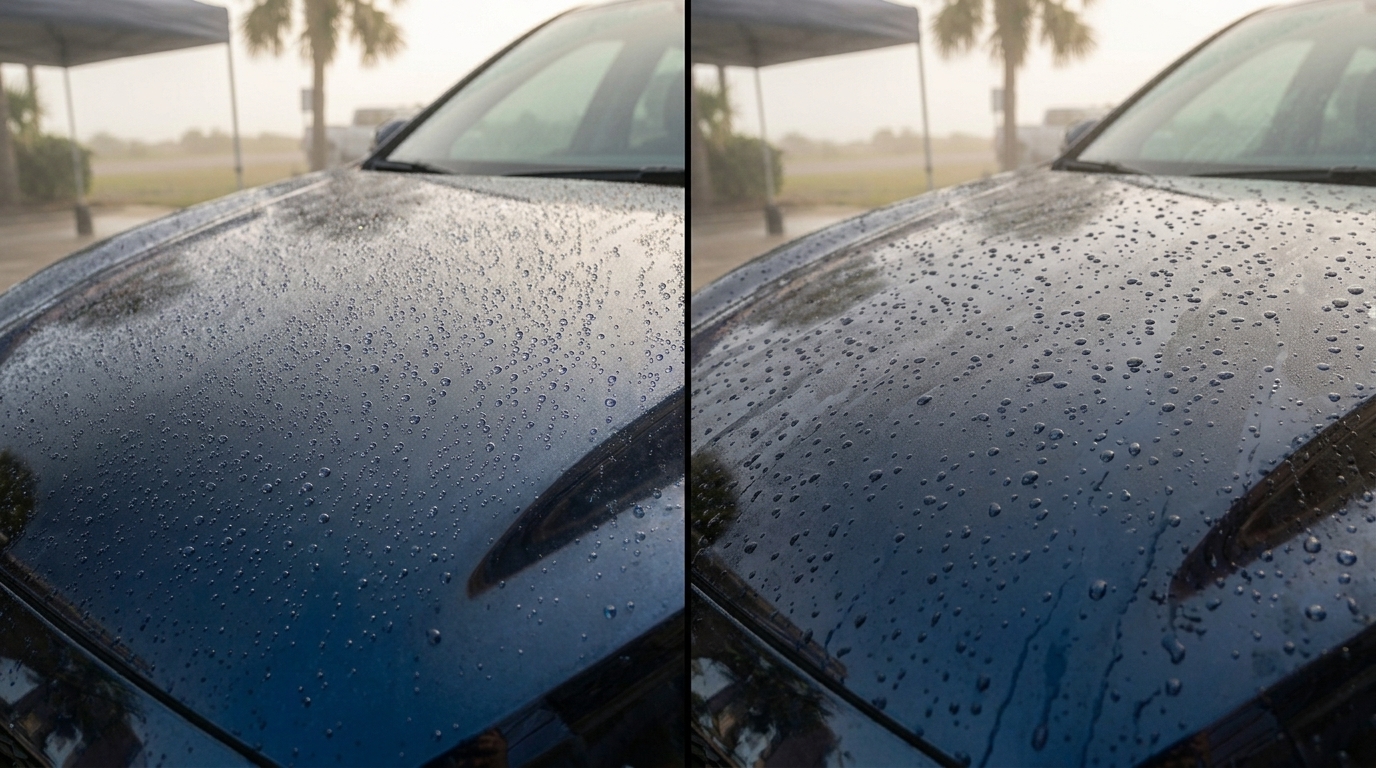
Wax gives a warm, rich glow that car lovers enjoy. Ceramic coating adds gloss too, plus strong water beading that makes washing easier. Both look great on clean paint, but the coating keeps that look going longer.
How Costs Add Up
Wax costs little for one application, but repeated coats add up over years. Ceramic coating costs more upfront and requires skilled prep and application. Spread over several years, the price gap narrows.
Long-lasting protection starts with the right prep and a steady hand. Shameez Car Detailing New Orleans delivers professional ceramic coating with patience and care in every step. Reach out today and give your paint a shield built for the Gulf Coast!
Pros and Cons: Ceramic Coating and Waxing
Each option protects paint in its own way, and the table below shows where each one shines and where it struggles.
| Factor | Ceramic Coating Advantages | Ceramic Coating Challenges | Wax Advantages | Wax Challenges |
| Lifespan | Lasts about 1 to 5 years | Needs good preparation and care | Easy to refresh | Typically lasts months, depending on product and care |
| Application | Durable bond to prepared paint | Requires careful preparation | Simple home application | Needs regular reapplication |
| Heat and UV | Longer-lasting surface protection | Does not repair damaged paint | Adds a sacrificial layer | Performance fades as wax wears away |
| Water and washing | Water beading and easier washing | Still needs regular gentle washing | Short-term water beading | Beading fades with wear |
| Cost | Fewer reapplications | Higher upfront cost | Lower cost per application | Repeated applications add up |
| Appearance | Lasting gloss | Existing swirls remain without correction | Warm, rich glow | Gloss fades with wear |
UV Protection Ceramic Coating vs Paste Wax: How the Shield Behaves Over Time
A ceramic coating bonds to the paint surface and forms a durable layer that helps resist environmental damage. Because it stays attached through washes, the shield keeps working day after day. The paint underneath stays protected longer, but the coating needs gentle washing to perform well.
Paste wax sits on top of the paint as a soft layer. Sunlight wears it down, and each wash reduces it, so wax protection gradually fades over time. Once that layer wears away, UV rays reach the clear coat again, which is why you need fresh coats of wax.
Frequently Asked Questions
How does high humidity affect car paint protection?
Humid, wet weather wears wax down faster and keeps water on your panels, which can leave spots. A coating helps water slide off and reduces spotting.
Is ceramic coating worth it on the Gulf Coast?
Usually yes for daily drivers parked outside, since coating lasts years and wax lasts months. Garage-kept cars with light use may do fine with wax.
Can I put wax over a ceramic coating?
Yes, some owners add a thin layer of wax over a fully cured coating for extra gloss.
Will ceramic coating make my car scratch-proof?
No. It resists light marks and stains, but it will not stop rock chips or remove existing scratches.
How does ceramic coating make washing easier?
Its water-repelling surface helps dirt and salt slide off, so a gentle wash clears the paint faster and with less risk of new scratches.
Conclusion
Ceramic coating beats wax on long-term staying power in our sun, humidity, and salt, while wax still wins on low upfront cost and home application. A well-prepped coating can protect paint for several years, and daily parking and washing habits shape the final result. Both options work best on clean, smooth paint, so match the product to your budget and driving habits before you apply any layer.
Protection looks better on a flawless surface than on a tired one. Shameez Car Detailing New Orleans brings a gentle touch and steady focus to every finish in its care. Our easy guide to “paint correction for swirl marks” explains how to achieve that smooth surface.