
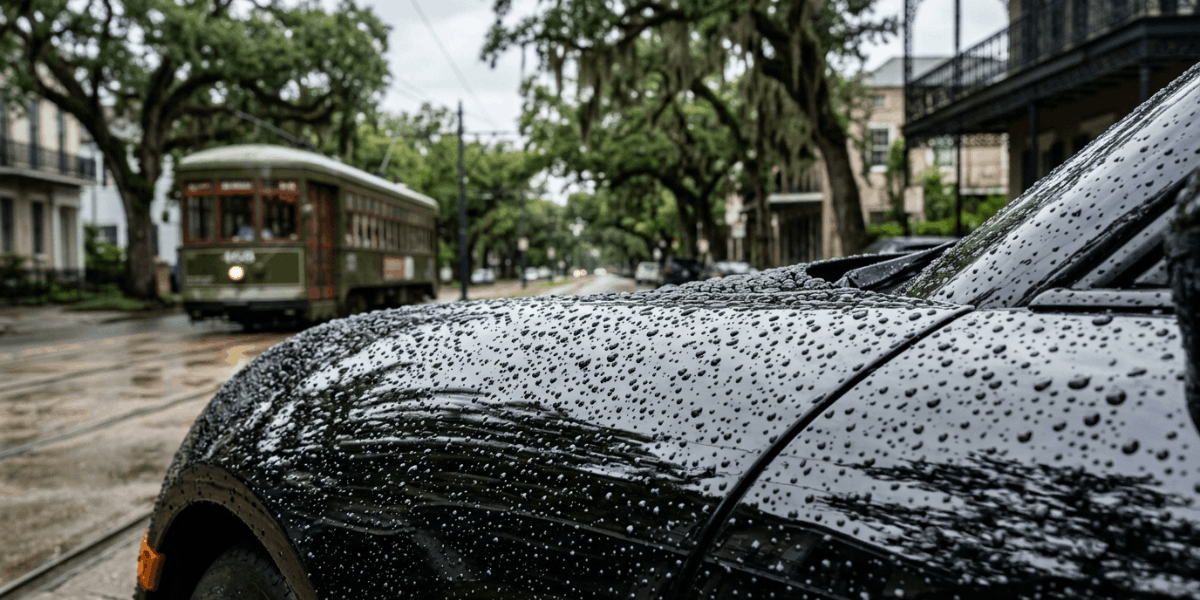
New Orleans can be demanding on automotive paint. Frequent rainfall, intense summer heat, strong sunlight, and humid conditions expose a vehicle’s exterior to changing environmental factors throughout the year. A ceramic coating helps protect the paint surface against environmental contaminants while making routine maintenance easier, but its protective performance gradually changes with use.
So, how often to reapply ceramic coating depends on more than the calendar. The coating’s formulation, installation quality, preparation work, maintenance routine, exposure to the elements, and driving frequency all influence how long it remains effective.
How Long Ceramic Coating Lasts in New Orleans
New Orleans puts vehicles through plenty of heat, rain, and humidity. National Weather Service 1991–2020 climate normals show an annual average high of 78.5°F and 63.35 inches of precipitation at New Orleans International Airport. Summer is especially demanding, with average highs reaching about 90°F or higher from June through August. For vehicles parked outdoors, that steady exposure makes regular washing, drying, and coating maintenance especially important.
The ceramic coating lifespan in New Orleans still depends on the product, installation, vehicle use, parking conditions, and maintenance. Professional-grade coatings can last several years, while consumer products may have shorter service lives. Frequent highway driving, outdoor parking, harsh washing methods, and heavy contamination can gradually affect coating performance.
Habits That Shorten a Coating’s Effective Life
Unsuitable cleaning products, abrasive automatic washes, heavy contamination, and poor maintenance can reduce coating performance. Regular washing and proper drying can also help minimize water spotting in rainy conditions.
When to Plan a Reapplication
There is no universal reapplication date. The coating should be assessed based on its expected durability and actual condition. If hydrophobic performance remains weak after proper washing and decontamination, a professional assessment can determine if the coating needs maintenance, a compatible topper, or complete replacement.
| Protection Layer | Typical Timing |
| Professional ceramic coating | Several years, depending on product and maintenance |
| Shorter-term consumer coating | Often a shorter service period |
| Ceramic booster or topper | According to the product or installer’s recommendations |
| Professional inspection | Periodically, particularly when performance changes |
| Full reapplication | When the existing coating has reached the end of its effective service life |
Top Signs Your Ceramic Coating Needs to be Redone
Recognizing the signs can help you distinguish normal surface contamination from genuine coating deterioration. No single symptom proves that the coating has failed, so several changes should be considered together.
1. Water No Longer Behaves as Expected
Water behavior is one useful indicator of coating performance. A healthy hydrophobic coating generally causes water to bead or sheet readily, depending on its formulation. If water begins sitting flat on the surface after the vehicle has been properly cleaned, the coating may need attention.
However, weak beading can also result from bonded contamination. A professional decontamination treatment may restore some water behavior without requiring a complete reapplication.
2. Gloss Looks Different
A noticeable reduction in gloss can indicate surface contamination, paint condition changes, or coating deterioration. Before replacing the coating, the vehicle should be washed and assessed properly because dirt and mineral deposits can make a coated surface look dull.
3. Dirt Sticks More Easily
One advantage of ceramic coating is easier maintenance. When dirt begins clinging noticeably to the surface and washing becomes more difficult, the coating may not be performing as it previously did.
That change does not automatically mean the coating has failed. Contamination can interfere with the surface, so proper cleaning should come before a final decision.
4. Water Spots Form and Remain
Water spots that repeatedly develop and become difficult to remove may indicate that the vehicle needs better washing and drying practices. They can also appear when the coating’s surface performance has declined.
Because New Orleans receives substantial rainfall throughout the year, controlling mineral deposits through regular maintenance can make a meaningful difference.
5. The Surface Remains Unresponsive After Maintenance
If proper washing, decontamination, and compatible maintenance products do not restore the coating’s expected behavior, a professional inspection may be appropriate. At that point, the installer can determine whether a maintenance treatment is sufficient or a new coating should be considered.
Ceramic Coating Maintenance Tips for Humid Weather
Good maintenance can help preserve the coating’s intended performance for as long as possible. The following tips are particularly useful for vehicles exposed to New Orleans’ humid and rainy conditions.
· Protect the Coating During the Initial Cure
Freshly applied ceramic coatings need time to cure according to the manufacturer’s instructions. During this period, the vehicle may need to remain dry and protected from rain, sprinklers, dew, and unnecessary contamination. Cure requirements vary by product, so the installer’s instructions should take priority. If the vehicle becomes wet during the initial curing period, follow the installer or manufacturer’s guidance rather than attempting an aggressive wash.
· Build a Consistent Washing Routine
Regular washing prevents dirt, bird droppings, tree sap, and other contaminants from remaining on the coating for extended periods. Use a car-care product recommended for coated vehicles and follow the coating manufacturer’s maintenance guidance. Washing in a shaded area can help prevent water and cleaning products from drying prematurely. A clean microfiber drying towel can also help reduce water spotting after washing.
· Use Suitable Cleaning Products
Avoid assuming that stronger chemicals produce better results. Automotive products designed for coated surfaces are generally preferable to household cleaners or aggressive degreasers. If a maintenance spray, topper, or ceramic booster is used, check that it is compatible with the existing coating system. Product-specific recommendations can vary.
· Support the Coating Between Washes
Bird droppings, tree sap, and other contaminants should be removed promptly using an appropriate method. Leaving acidic or chemically active contamination on the paint for extended periods can increase the risk of surface damage. Parking in a garage or shaded location can also reduce direct exposure to sunlight. These measures do not eliminate environmental exposure, but they can reduce some of the stress placed on the vehicle’s exterior.
· Schedule Periodic Professional Checks
A professional inspection can help identify surface contamination, water spotting, coating deterioration, or paint issues before more extensive work becomes necessary.
Shameez Car Detailing New Orleans provides professional vehicle care services for drivers who want to maintain their exterior finish in local conditions. When additional maintenance is needed between coating services, get professional car detailing in New Orleans to keep your vehicle clean and properly cared for.
Frequently Asked Questions
1. Does humidity affect ceramic coating?
Humidity does not normally damage a fully cured coating. However, it can contribute to water spots and contamination, while high humidity may affect curing during application.
2. Do I need to remove the old coating before reapplying?
Not always. The existing coating should be inspected first. Cleaning and decontamination may be enough, but a badly deteriorated coating may require additional preparation.
3. Can I use an automatic car wash on a coated vehicle?
Touchless washes reduce physical contact with the coating. Brush-based washes may cause marring, so careful hand washing with suitable products is often preferred.
4. How soon can I wash my car after a ceramic coating is applied?
The waiting period varies by product. Follow the coating manufacturer’s or installer’s curing instructions rather than using a universal timeframe.
5. Will rain affect a fresh ceramic coating?
Rain can interfere with recommended curing conditions and may cause water spots during the initial cure. Once fully cured, normal rain does not automatically damage the coating.
Conclusion
Ceramic coating can provide durable surface protection for New Orleans vehicles, but its performance depends on the product, weather exposure, driving frequency, parking conditions, washing methods, and maintenance habits. Instead of relying on a fixed reapplication date, watch for changes in water behavior, gloss, cleaning performance, and surface condition. Proper washing and decontamination should be considered before deciding that the coating needs to be replaced, while a professional inspection can help determine the appropriate next step.
Ready to maintain or renew your vehicle’s ceramic coating? Shameez Car Detailing New Orleans offers professional ceramic coating and vehicle care services for local drivers. If your existing coating is showing changes in performance, get our professional assessment to determine whether it needs maintenance or a complete reapplication.