
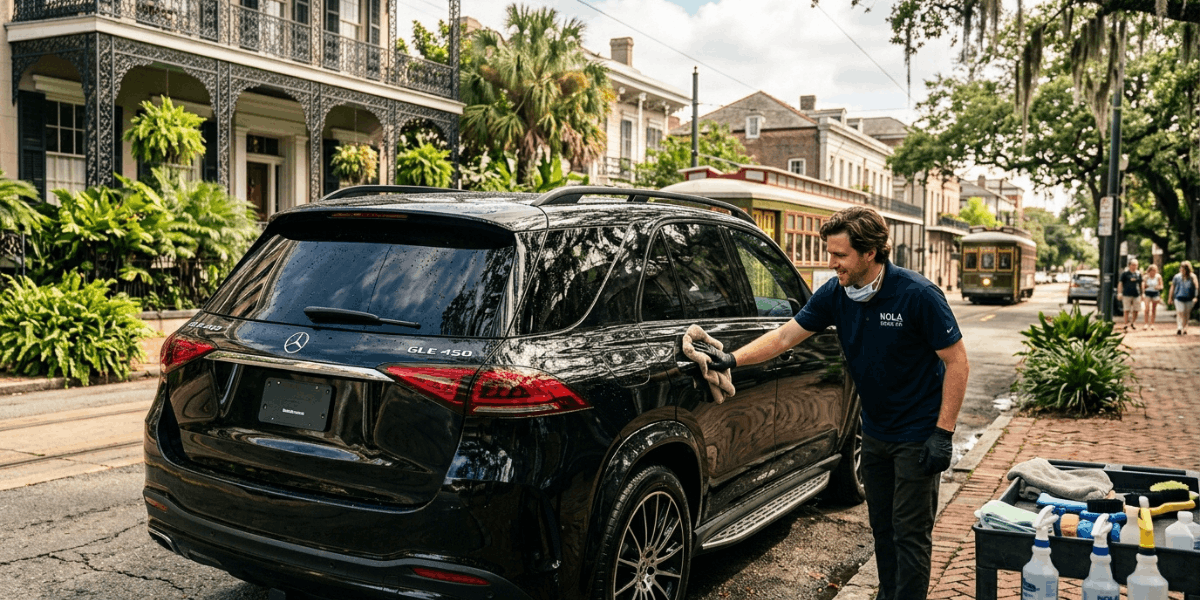
Most car owners know they should get their vehicle detailed regularly, but figuring out exactly how often is where things get unclear. In a city like New Orleans, the answer is more specific than a simple “twice a year.” The subtropical climate, relentless humidity, intense UV exposure, heavy seasonal rainfall, and the aftermath of hurricane season all create conditions that are genuinely tough on vehicles.
Your car is working against the environment every single day, and a standard detailing schedule designed for moderate climates simply won’t cut it here. This guide lays out exactly what your vehicle needs and when, so you can protect your investment all year long.
Why New Orleans’ Climate Demands a Different Approach
New Orleans sits in a subtropical zone where summer heat regularly reaches the upper 90s, humidity rarely drops below 60%, and rainfall totals are among the highest of any major US city. That combination creates conditions in which oxidation, mold, water spotting, and paint degradation occur faster than in drier climates.
Add the city’s famous tree canopy, which drops sap and debris year-round, plus flood-prone streets that leave mineral deposits on the undercarriage after heavy rain, and you have a vehicle environment that demands a proactive car detailing schedule that New Orleans residents should follow consistently.
Seasonal Car Detailing in Louisiana and What Each Season Demands
New Orleans doesn’t experience dramatic seasonal swings, but each season brings its own specific threats. Understanding those threats helps you time your detailing appointments for maximum impact.
Spring: Pollen, Rain, and Surface Buildup
Spring arrives early in New Orleans and brings heavy pollen from oak trees, magnolias, and flowering plants. This pollen settles on every surface in thick layers that are mildly acidic and quickly bond to paint if left uncleaned.
Spring rainfall spreads pollen and contaminants across the paint, leaving water spots when it dries. A thorough exterior detail at the start of spring, followed by a mid-season maintenance session, gets ahead of buildup before it causes lasting surface damage.
Summer: Intense Heat, UV Rays, and Humidity
Summer is the most demanding season for New Orleans vehicles. Extreme UV exposure accelerates clear coat oxidation, paint fading, and interior surface cracking. Dashboard plastics, leather seats, and vinyl trim all suffer when a car sits in direct sun without protection.
Humidity simultaneously encourages mildew growth in door seams, trunk linings, and fabric panels. A full detail at the start of summer with a protective coating refresh, followed by a mid-summer follow-up, keeps the vehicle protected through the hardest months.
Fall: Tree Debris, Sap, and Pre-Storm Preparation
Fall remains warm and wet, and the city’s tree canopy sheds debris heavily. Oak leaves, seed pods, and tree sap cause staining that is difficult to remove without paint correction if left sitting. Fall also overlaps with the later weeks of hurricane season, meaning vehicles may face flooding and storm debris.
A fall detail should include thorough paint decontamination, undercarriage cleaning, and a fresh protective sealant layer to prepare the car for whatever the final weeks of the storm season may bring.
Winter: Mild but Damp
New Orleans winters are mild but consistently damp and overcast. While road salt is rarely a concern here, ongoing humidity and frequent rain still promote mold growth, water spotting, and gradual surface degradation. A winter detail should focus on a thorough interior deep clean to eliminate moisture-related odors and a protective exterior treatment to seal paint against the damp conditions.
Hurricane and Flood Season: A Special Consideration
Hurricane season generally occurs from June to November and requires a separate entry in any detailing plan. After a significant storm or flooding event, vehicles should be detailed as soon as it is safe to do so.
Floodwater carries contaminants, sediment, and mineral deposits that bond to paint and rapidly corrode metal surfaces. Interior flooding requires immediate professional remediation to prevent mold growth, which becomes a serious health concern within days.
Year-Round Threats Unique to New Orleans
Several threats don’t follow the seasonal calendar. Bird droppings are a persistent issue given the city’s dense urban bird population, and a single drop left on paint for more than 48 hours can etch the clear coat permanently in New Orleans’ heat.
Tree sap drips from the overhanging canopy across all twelve months, and roadway flooding leaves sediment on lower panels and undercarriage that accumulates quickly between washes.
How Often Does a Car Detail in New Orleans Need to Happen
Detailing frequency depends on how the vehicle is used and how much exposure it faces day to day. The table below gives a practical breakdown by vehicle type and usage.
Vehicles parked outdoors, driven on flooded streets, or sitting under heavy tree coverage will need more frequent attention than the table suggests.
Shameez Car Detailing New Orleans offers same-day booking across five city locations and mobile detailing that comes directly to your home or workplace. Book your next session today and keep your vehicle protected all year long.
Interior Car Detailing in New Orleans, LA, and Why It Matters as Much as the Exterior
Many vehicle owners focus on exterior protection and overlook what is happening inside the cabin. Interior car detailing professionals in New Orleans, LA, consistently see the effects of the city’s humidity on vehicle interiors: mold in seat cushions, mildew odors embedded in carpet fibers, and cracked dashboard plastics from UV exposure through the windshield.
A thorough interior detail includes deep cleaning of all fabric and leather surfaces, steam treatment to eliminate bacteria and mold spores, conditioning of leather and vinyl to prevent cracking, and odor elimination for vehicles with persistent musty smells. In New Orleans, the interior deserves professional attention at least every three to four months for daily drivers.
Building a Car Detailing Schedule That Works for New Orleans
The most effective car detailing schedule in New Orleans that car owners can follow combines a seasonal deep detail with regular maintenance in between. A practical annual framework looks like this:
- A comprehensive full detail at the start of spring to address pollen and prepare for the humid months ahead.
- An exterior and interior maintenance detail in mid-summer to refresh protection during peak UV and heat exposure.
- A fall detail after peak hurricane season to decontaminate and reseal the paint before the damp winter months.
- A final interior-focused detail in winter to clear moisture-related odors and condition surfaces after months of humidity exposure.
In between scheduled sessions, a professional wash every two to three weeks prevents contaminants from bonding to the paint and keeps protective coatings performing at their best.
Frequently Asked Questions
How often should a car be detailed in New Orleans?
Most daily drivers benefit from a full detail every four to six months, with exterior maintenance every six to eight weeks in between. The city’s humidity and storm season make more frequent attention necessary compared to drier climates.
Does New Orleans humidity damage car interiors?
Yes, persistent humidity accelerates mold and mildew growth in carpet fibers, seat cushions, and door panels. Regular interior detailing with steam treatment removes moisture-related bacteria and prevents long-term odor and structural damage.
What should I do after my car is exposed to floodwater?
Schedule a professional detail as soon as possible. Floodwater carries contaminants and sediment that quickly corrode paint and metal surfaces, and interior flooding requires immediate remediation to prevent mold growth.
Is quarterly detailing enough for vehicles in New Orleans?
For daily drivers with significant outdoor exposure, quarterly detailing may not be sufficient. Every four to six weeks for exterior maintenance and every three to four months for interior cleaning is a more appropriate schedule.
Does ceramic coating reduce how often I need to detail in New Orleans?
Yes, a quality ceramic coating reduces the rate at which contaminants bond to paint, extending intervals between full details. Regular washing and periodic maintenance sessions are still necessary to keep the coating performing at its best.
Conclusion
New Orleans demands more from its vehicle owners than most cities. The combination of subtropical heat, high humidity, hurricane season, heavy rainfall, and a dense urban tree canopy creates conditions where paint fades faster, interiors develop mold more easily, and contaminants accumulate more aggressively.
Following tailored, seasonal car detailing in Louisiana is the most effective way to protect your vehicle’s appearance, preserve its resale value, and keep it looking sharp despite everything this city puts it through. The investment in regular professional detailing pays off every time you step back and see a car that still looks its absolute best. Ready to restore your vehicle’s shine? Book a professional car detailing service in New Orleans with Shameez Car Detailing New Orleans and enjoy quality care, flexible scheduling, and mobile service wherever you need it.