
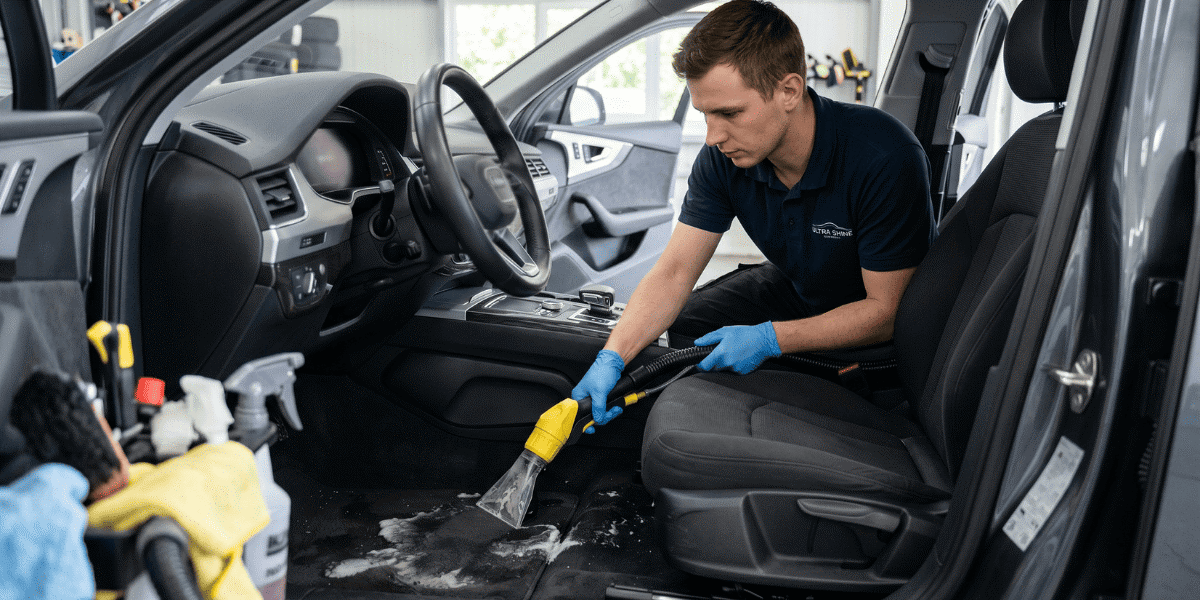
A clean vehicle interior does more than improve appearance. It also helps maintain comfort, cabin hygiene, and the long-term condition of interior materials. Many drivers vacuum visible dirt and wipe down the dashboard occasionally, but deeper contamination often stays hidden inside carpets, air vents, seat creases, and narrow storage spaces. Dust, food debris, moisture, body oils, and bacteria gradually collect in these areas during daily driving.
This is why learning how professionals handle interior cleaning can make a major difference. A proper deep clean car interior process follows a structured method that focuses on every major surface inside the cabin. Professional detailers use specialized tools, safe cleaning products, and careful techniques designed for different interior materials. Instead of rushing through the process, they work section by section to remove buildup that regular cleaning usually misses.
Start with Removing Trash and Loose Clutter
Before deep cleaning begins, professionals always clear out the cabin completely. Loose items block access to important areas and make proper cleaning much harder. Removing clutter also helps reveal hidden dirt that normally stays out of sight.
Start by taking out trash, water bottles, food wrappers, personal belongings, loose papers, and floor mats. Once the cabin is empty, the cleaning process becomes much more organized and efficient.
Areas Drivers Commonly Forget
Several sections inside the vehicle often collect hidden debris because they are rarely checked during routine cleaning.
- Under Seats: Coins, crumbs, pet hair, and dust gather underneath seats quickly. This area is often one of the dirtiest parts of the cabin.
- Door Pockets: Door compartments collect wrappers, dirt, receipts, and sticky residue from daily use.
- Seatback Compartments: Storage pockets behind seats commonly trap dust and loose debris that build up over time.
- Trunk Corners: The corners of the trunk often collect sand, leaves, dirt, and moisture that remain unnoticed for long periods.
Removing clutter first creates better access for the deeper cleaning stages that follow.
Vacuum Every Interior Surface Thoroughly
Vacuuming is one of the most important steps of any professional car interior cleaning routine. Many people vacuum only large visible areas, but professional detailers focus on every corner of the cabin. Using different vacuum attachments allows better access to tight spaces where debris settles deeply into fabric and carpeting.
Why Detailed Vacuuming Matters
Vacuuming before using liquid cleaners prevents dirt from turning into muddy residue during later cleaning stages. It also removes loose contaminants that can scratch delicate surfaces while wiping. A proper vacuuming routine helps prepare the cabin for deeper cleaning later in the process.
Key Areas That Need Extra Attention
- Seat Creases: Small debris and crumbs settle deep into seams between seat cushions.
- Carpet Edges: Dirt becomes packed tightly against trim edges where standard vacuum heads often cannot reach.
- Air Vent Openings: Dust collects inside vents constantly and may circulate through the cabin air system.
- Center Console Gaps: Coins, crumbs, and oils gather around buttons, cup holders, and storage compartments.
- Under-Seat Rails: Seat tracks trap dirt, hair, and debris that often remain untouched during routine cleaning.
Professional detailers spend extra time on these tight spaces because hidden buildup affects overall cabin cleanliness significantly.
Clean Upholstery and Carpets the Right Way
Fabric seats and carpets absorb dirt, moisture, food particles, and odors every day. Over time, these contaminants settle deep into fibers and become difficult to remove with surface cleaning alone. Knowing how to detail car interior surfaces properly requires using the correct cleaning method for each material type.
Shampooing Fabric Surfaces
Fabric upholstery often benefits from low-moisture shampooing techniques that loosen dirt without soaking the material excessively. Professionals typically apply fabric-safe cleaners, agitate lightly with soft brushes, and extract residue carefully. This process helps reduce staining while improving overall fabric appearance.
Low-Moisture Cleaning Matters
Excess water can soak into seat padding and carpets, leading to slow drying, lingering odors, mildew development, and moisture damage. Professional detailers work carefully to control moisture levels during cleaning.
Disinfect High-Touch Interior Surfaces
High-contact surfaces collect oils, fingerprints, bacteria, and residue throughout the day. These sections should receive careful attention during deep interior cleaning.
Important High-Touch Areas
- Steering Wheel: Steering wheels collect oils and dirt from hands constantly during driving.
- Gear Shift: Frequent contact causes grime buildup around shift knobs and surrounding trim.
- Door Handles: Interior handles often hold fingerprints and residue from repeated use.
- Touchscreens: Screens require gentle cleaning methods to avoid scratches or surface damage.
- Buttons and Controls: Dust and oils collect around climate controls, radio buttons, and adjustment switches.
Using interior-safe cleaning products is extremely important during this stage. Harsh household chemicals may damage screens, dry out trim, or leave behind residue that attracts more dirt later.
Don’t Ignore Air Vents and Hidden Crevices
Dust and allergens build up inside narrow interior spaces faster than many drivers realize. These sections may seem small, but they affect cabin cleanliness and air quality significantly. Professionals use soft detailing brushes, compressed air tools, microfiber towels, and small vacuum attachments to clean these hard-to-reach spaces safely.
Air vents require careful cleaning because delicate vent fins can break easily under excessive pressure. Small brushes loosen dust while compressed air removes trapped particles. This section of the process is often overlooked during DIY cleaning, but it contributes heavily to the overall final result.
Protect Leather, Plastic, and Vinyl Surfaces
Cleaning alone is not enough for long-term interior care. Interior surfaces also need protection against heat, sunlight, oils, and daily friction. Leather, vinyl, and plastic surfaces gradually lose moisture and flexibility over time. Without proper care, they may fade, dry out, or crack prematurely. A complete interior car detailing guideusually includes conditioning and UV protection after cleaning is finished.
Conditioners and protectants help maintain interior materials in better condition while reducing long-term wear caused by sunlight and heat exposure.
Eliminate Odors Instead Of Covering Them
Air fresheners only hide smells temporarily. Professional detailers focus on removing the actual source of odors instead of masking them. Lingering smells commonly come from:
- Food spills
- Moisture buildup
- Pet hair
- Smoke residue
- Bacteria trapped in fabrics
Deep cleaning carpets, upholstery, and hidden spaces helps reduce these odor sources more effectively. This is one reason many vehicle owners notice a significant improvement after scheduling interior car detailing services with Shameez Car Detailing New Orleans.
Dry the Interior Properly After Cleaning
Drying is one of the most important steps after deep cleaning. Even a well-cleaned interior can develop problems if moisture remains trapped inside fabrics or carpeting. Professionals use air movers, drying towels, and open airflow circulation to help speed up the drying process safely. Proper drying helps reduce the risk of mildew odors, damp carpeting, fabric deterioration, and moisture buildup beneath seats. Skipping this stage can undo much of the cleaning work completed earlier.
Common Mistakes to Avoid During Interior Cleaning
Many DIY cleaning attempts create additional problems because improper products or methods are used.
· Using Harsh Household Chemicals
Strong cleaners may damage leather coatings, touchscreens, plastic trim, and upholstery fibers. Automotive-specific products are much safer for interior materials.
· Over-Saturating Upholstery
Excess moisture trapped inside seats and carpets can lead to odor problems later.
· Scrubbing Delicate Materials Aggressively
Heavy scrubbing weakens fabric fibers and damages protective coatings on leather surfaces.
· Ignoring Hidden Dirt Buildup
Focusing only on visible areas leaves behind contaminants in vents, seams, and under-seat spaces. Following proper DIY car detailing tips helps reduce the chance of accidental interior damage during cleaning.
Frequently Asked Questions
1. How often should I deep clean my car interior?
Most vehicles benefit from a deep interior cleaning every few months, depending on driving habits, passengers, pets, and daily usage.
2. Can steam cleaning damage car seats?
Steam cleaning is generally safe when used properly with controlled moisture and correct techniques for the material type.
3. What is the best way to remove interior odors?
Deep cleaning carpets, upholstery, vents, and hidden spaces helps remove odor sources more effectively than air fresheners alone.
4. Are household cleaners safe for vehicle interiors?
Many household cleaners contain strong chemicals that may damage automotive leather, plastic, vinyl, and electronic surfaces.
5. Why does my car still smell after cleaning?
Odors often remain when hidden contamination beneath seats, carpets, or vents is not fully removed during cleaning.
Final Thoughts
Deep interior cleaning involves much more than quick vacuuming and surface wiping. Professional detailers follow a structured process that focuses on hidden dirt, trapped debris, stains, odors, and material care throughout the cabin. Careful vacuuming, proper surface treatment, safe cleaning products, and controlled moisture levels all contribute to better results. Taking the time to clean interior surfaces properly helps maintain comfort, improve cabin cleanliness, and support the long-term condition of interior materials. Consistent maintenance also helps reduce heavy buildup that becomes harder to remove later.
Keeping your vehicle interior in good condition takes time, proper tools, and careful cleaning methods. Book car detailing services with Shameez Car Detailing New Orleans to improve cabin cleanliness, reduce odor buildup, and maintain long-term interior surface condition through structured professional care.